Pages

Showing posts with label TECHNOLOGY. Show all posts

Monday, 25 April 2011

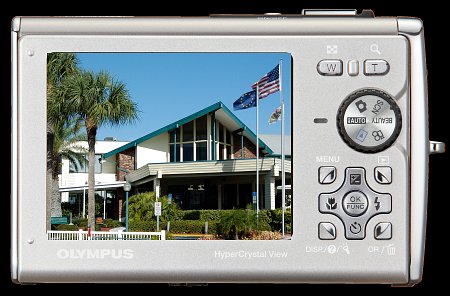
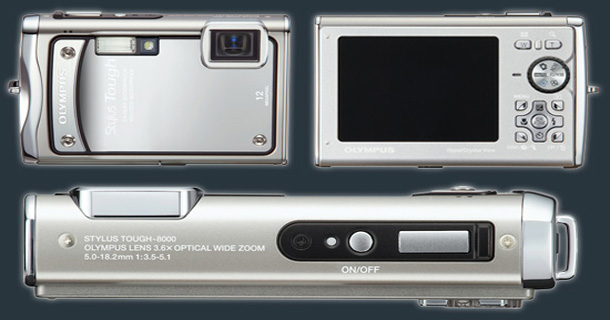
Olympus Stylus Tough 8000 – Camera for all Seasons


tough8000
The Olympus stylus Tough-8000 is the newest member of Olympus’s extensive range of shockproof and waterproof digital cameras.
The 12-megapixel Tough-8000 looks strong, with metal edges and screws.  Tough-8000 measures 3.7 x 2.4 x .85 (W x H x D, in inches), and weighs 7.4 ounces with battery and card in place.
Like the Pentax W80 and Canon Powershot D10, it can operate at down to 14 degrees Fahrenheit, making it ideal for winter season. Its metal body and shock-absorbing system can survive drops up to 6.6 feet and it’s crushproof up to a weight of 220 pounds.
You can choose from a choice of normal macro, supermacro and supermacro with LED. The optical zoom and the flash are only usable in the first one – the lens is fixed at the wide end in the supermacro modes, and the flash is turned off.
Stylus Tough-8000 uses Dual Image Stabilization combines two technologies mechanical Sensor-Shift Image Stabilization and Digital Image Stabilization  to provide one powerful anti-blur solution for capturing great images whether the photographer or the subject is moving. Olympus mechanical Sensor-Shift Image Stabilization keeps images sharp by adjusting the internal image sensor to compensate for camera movement, even in low-light conditions when shutter speeds are slower.
Coming to memory, The Tough 8000 mainly uses xD cards for storage, which currently only go up to 2GB in capacity. If you want more space, Olympus includes a small adapter for use with microSD/microSDHC cards.
The STYLUS TOUGH-8000 can be fully submerged to capture photos down to 33 feet (10 meters) underwater, and features a built-in manometer, making it ideal for more serious underwater adventurers who want to know the depth of where their images were taken. There are four modes for underwater photography: Underwater Snapshot, Underwater Wide 1, Underwater Wide 2 and Underwater Macro.
If you are planning for an underwater adventure trip, this is the camera you should consider.
  

Saturday, 23 April 2011

Smart Finger – Measuring made simple


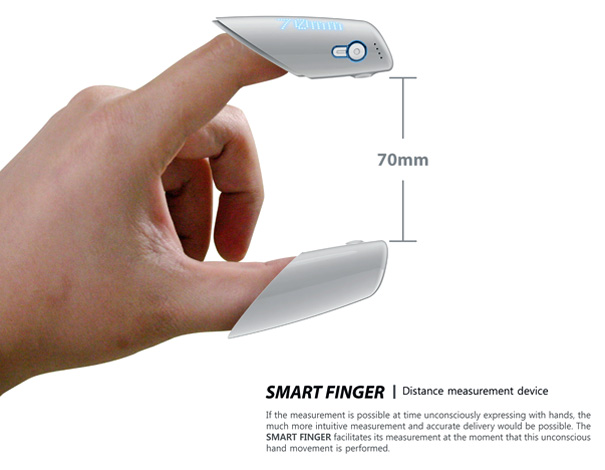
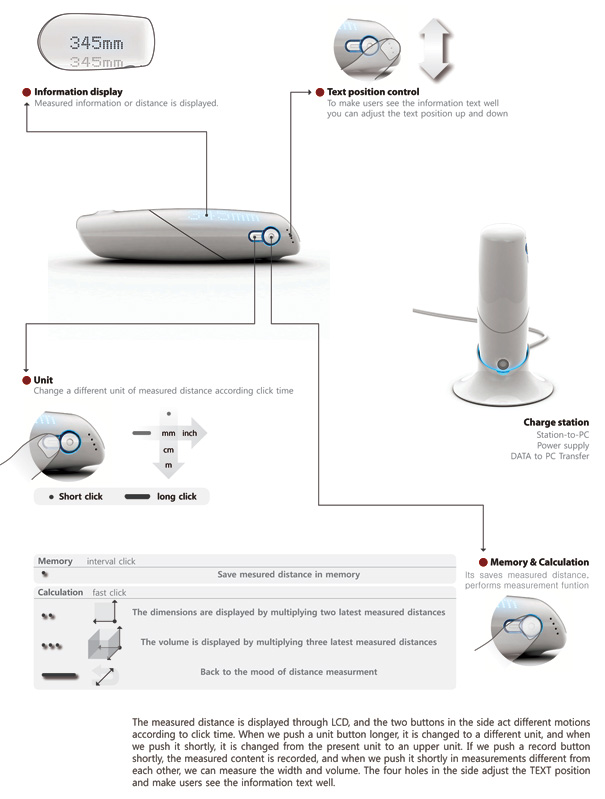
A concept design featured over on the Yanko Design blog, and the brainchild of designers Choi Hyong-Suk, Jung Ji-hye and Yoo-Jin Park, the Smart Fingers are augmentations for your human hands that allow you to measure any distance quickly and easily.


It works by beaming a signal between the fingertip sensor and the thumb sensor: by measuring how long it takes for this signal to reach the receiving sensor, you can work out how far apart the two sensor are to a surprisingly high level of accuracy – it’s similar to how ultrasonic ‘tape’ measures work.
In olden days, people used to measure with their hands and palms, Jaana (length from thumb to little finger) or bethu(width of 4 finger). Even now, if you are asked to tell the size, unconsciously you will show it with your hands.
Once the distance has been calculated, it’s displayed on an integrated LCD screen for you to jot down – but just being able to tell the length of an object isn’t smart enough for this gang of designers. Rather, you can also program the unit to expect additional measurements: add in a second and it’ll automatically calculate the area you just measured; give it a third and it will happily work out the volume of the area measured.
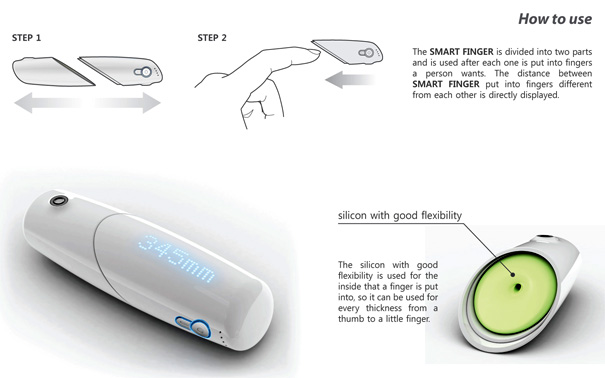
The Smart Finger is made out of silicon to make it possible to wear it with any finger size.  It manages to measure length, breadth and volume all through pushing a few little buttons.  Once it measures the distance it’ll display it through LED.  It measures by the basis of the time taken by the signal to beam from one finger to the other and back again.  Right now this is obviously a concept, but it is an interesting one to say the least.
As it is a concept, you can take this up as an engineering Project! I bet it will become a good one if completed.
All the above images and concept is feature by Yanko Design blog (http://www.yankodesign.com/2010/09/13/my-fingers-are-so-smart-they-measure/ )

Bendable Display -AMOLED from Samsung


Active-matrix OLED (Active-matrix organic light-emitting diode or AMOLED) is a display technology for use in mobile devices and televisions. OLED describes a specific type of thin film display technology in which organic compounds form the electroluminescent material, and active matrix refers to the technology behind the addressing of pixels. As of 2011, AMOLED technology is used in mobile phone and media players and continues to make progress toward low-power, low-cost and large-size (for example 40 inch) applications.

  
An active matrix OLED display consists of a matrix of OLED pixels that generate light upon electrical activation that have been deposited or integrated onto a thin film transistor (TFT) array, which functions as a series of switches to control the current flowing to each individual pixel.
Typically, this continuous current flow is controlled by at least two TFTs at each pixel, two to start and stop the charging of a storage capacitor and the second to provide a voltage source at the level needed to create a constant current to the pixel and eliminating need for the very high currents required for passive matrix OLED operation.
TFT backplane technology is crucial in the fabrication of AMOLED displays. Two primary TFT backplane technologies, namely polycrystalline silicon (poly-Si) and amorphous silicon (a-Si), are used today in AMOLEDs. These technologies offer the potential for fabricating the active matrix backplanes at low temperatures (below 150°C) directly onto flexible plastic substrates for producing flexible AMOLED displays.
Active-matrix OLED displays provide higher refresh rates than their passive-matrix OLED counterparts, and they consume significantly less power.  This advantage makes active-matrix OLEDs well suited for portable electronics, where power consumption is critical to battery life.
The amount of power the display consumes varies significantly depending on the color and brightness shown. As an example, one commercial QVGA OLED display consumes 3 watts while showing black text on a white background, but only 0.7 watts showing white text on a black background.
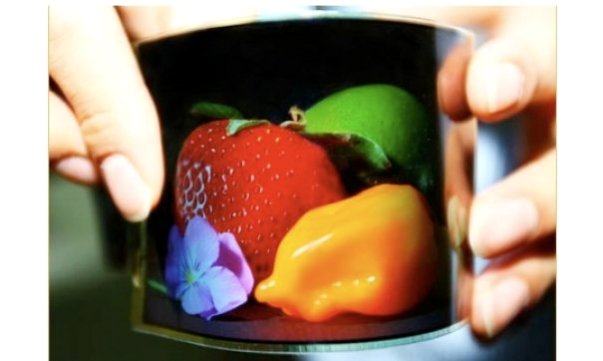
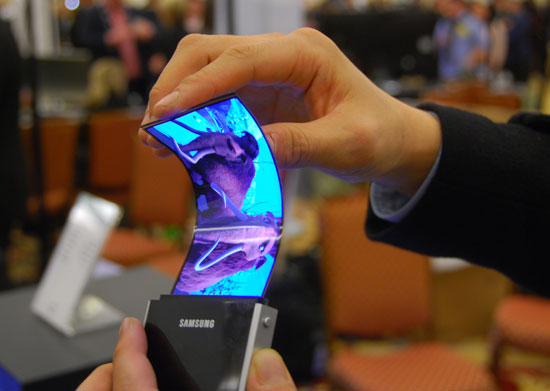
Samsung Mobile Display will show a prototype of an advanced flexible AMOLED display that is only 0.2mm thick! This display will be 4.5-inch long and would support WVGA 800×480 pixel resolution. This AMOLED display is so flexible that it can be rolled down to one centimeter radius. These flexible AMOLED displays are made from plastic substrates that are not prone to breakage during manufacturing process.
These advanced flexible AMOLED displays are designed for smartphone and tablet PCs. An update about this display hints that the Galaxy S successor, which was rumored last month, may sport it. The Galaxy S successor was said to come with super AMOLED 2 and it seems like Samsung is going to show a similar AMOLED display technology.

Ideas for Better Traffic Lights


Almost 8% of the global road traffic accidents occur in India. Much of the Internet is full of sarcasm & mocking of the undisciplined driving on Indian roads and traffic problems. Take any metro city, be it Mumbai or Hyderabad, no city is exception to the traffic problems.  Other than improving basic driving sense among citizens, as an engineer i am more concerned about our traffic management system.

Virtual Wall Concept:
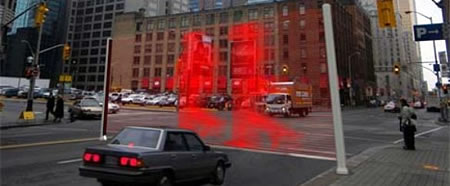
Product designer Hanyoung Lee has come up with something practical to replace our traffic lights of today. The Virtual Wall from Lee is basically a plasma laser barrier that highlights crosswalks on which pedestrians cross the street. The lasers are not powerful enough to harm cars or people but the effect is enough to make drivers stop and let the pedestrians cross.
Square Traffic Lights:
 
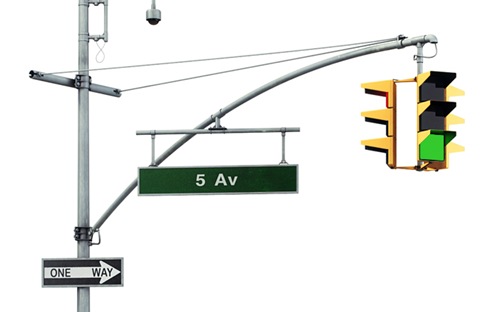
Nowadays, with the advent and almost ubiquitous use of LED technology in traffic signals, we’re no longer tied to archaic concepts like round lights. Russian design studio Art Lebedev argues that a square light the same height and width as a regular traffic light will draw more attention from drowsy and distracted drivers, due to the simple fact that it’s lighting a larger area overall.
Solar Powered system with News/Information:
 
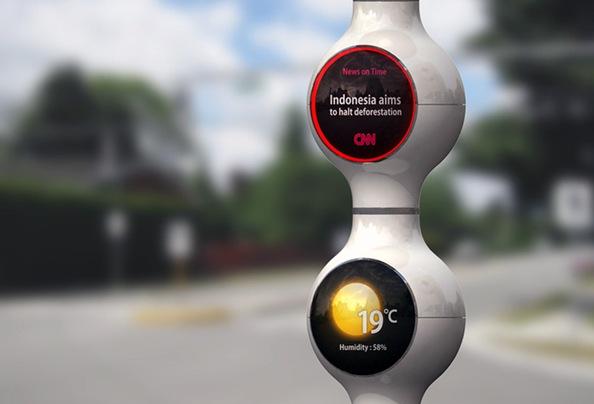
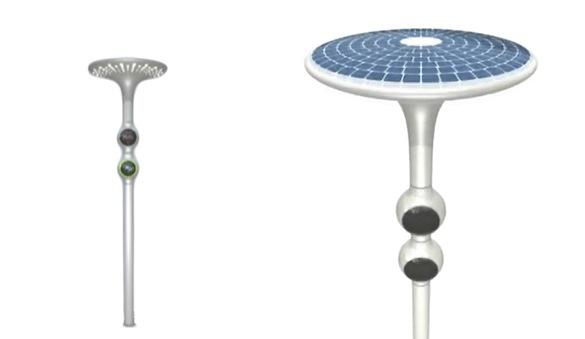
Korean design and development studio psychic factory, proposes a system that is modeled on the standing style of traffic light. After turning red, the light swivels its LED displays to project news headlines and useful information such as the weather or time. Shortly before turning green, the display switches again, and the device returns to functioning as a normal traffic light. This way time is not wasted while waiting. Other than that this can be powered using solar power thus saving conventional energy.
Traffic Lights talking with Vehicles:
Similar to a GPS system which prompts you with location and directions, this new system will interact with your car or motorcycle and prompts you with signals. This way you receive a warning when a car’s speed suggests it will run a red light. By establishing a communication with vehicles in queue at a traffic signal, the system will calculate and may give start and stop directions to engine. This way a lot of fuel can also be saved.

Friday, 22 April 2011

Android Phone – Flipout from Motorola


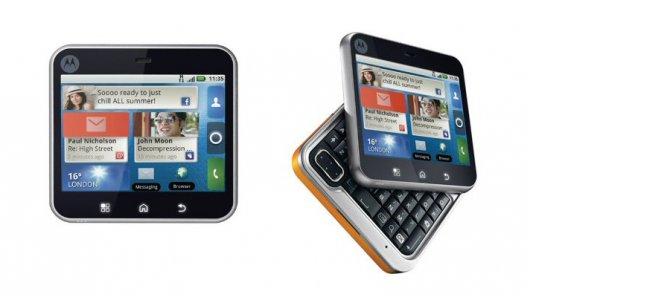
When it comes to entry level Android handsets, it looks like novelty devices is the trend in the mobile market. At first glance, the Motorola Flip Out surprised us because of its square shape, with dimensions of 67 x 67 x 17 mm 120g, the Motorola device will appeal to anyone whose first selection criterion is portability. The screen delivers a decent viewing experience for most tasks, with adjustable brightness for good performance in sunlight.

With a 2.8 inch capacitive touch-screen and a QWERTY physical keyboard underneath, the phone seems to compete most directly with the X10 mini Pro. The phone feels solid and well put together. The keyboard panel is markedly heavier than the screen panel, which is great when typing. The handset is powered with the 1170 mAh Li Ion battery, which promises 365 hours of standby time.
Flipout is a compact phone with a fixed focus camera of 3 mega pixel resolution. There is no front-facing camera for video calling. The camera supports video shooting at 352×288 res at 26-30 fps. It has digital zoom and Geo Tagging features.
The phone incorporates the QuickOffice suite that can play different file, excel, word, powerpoint. A configuration wizard for Email, facebook, twitter, of course Gmail and Google Maps GPS, are also included as features.
Complete Features list of Flipout Phone from Motorola:
Supports 3G
Camera: 3 MP
OPERATING SYSTEM: Android 2.1 with MOTOBLUR 1.5
KEYBOARD: QWERTY
DISPLAY TYPE: TFT
WEIGHT: 120 g
SIZE (H X W X D): 67 x 67 x 17 mm
DISPLAY SIZE: 2.8-inch; QVGA TFT (320 x 240 pixels)
Music: H.264, WMA9, AAC, MPEG-4, MP3, WMA v9, AMR NB, eAAC+ , AAC+
The best thing of the phone is When closed, the screen is even more highlighted. It looks extremely stunning when closed. The memory of handset can be expanded up to 32 GB. The price in the Indian market of the FlipOut is Rs 16,000.

Anti-Theft Technology for Laptop Security from Intel


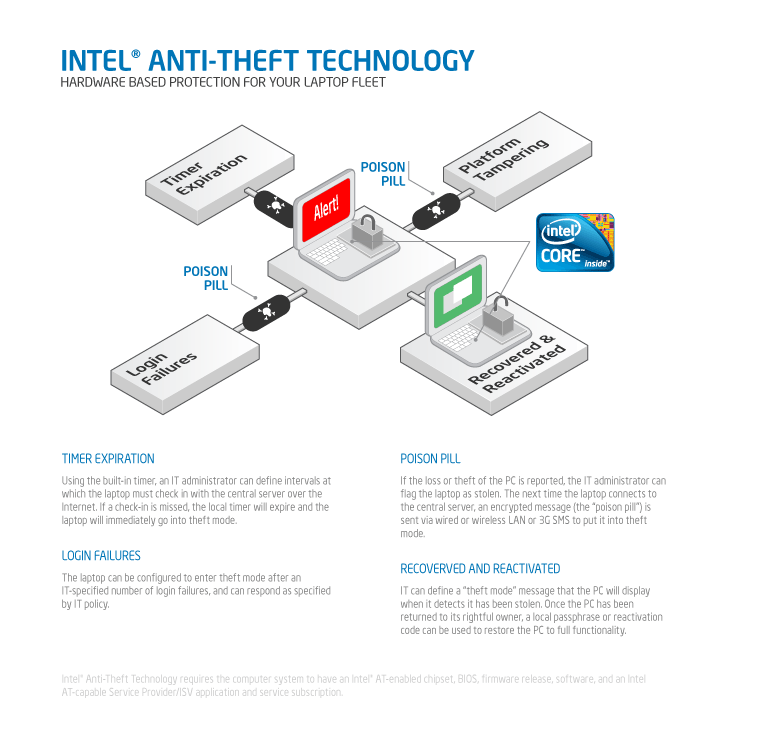
Laptop theft is an increasing phenomena in urban India particularly in student hostels and bachelor accommodations. Intel came up with an in-built feature that will shut down the laptop and make it useless for the thief remotely. Though you may not recover the lost laptop, it will act as an deterrent for a possible theft.
This intelligent laptop security technology is built into select 2nd generation Intel® Core™ and 2nd generation Intel® Core™ vPro™ processor families. This technology is built into the processor, so this will be activated even before that startup.  By remotely activating it, we can shut the pc. It will work even without internet as it is hardwired and as it starts before startup, it is tamper proof.
There is an additional feature which will alert anyone who starts the laptop that the product they are trying to use is stolen one.
When i was discussing about this technology with my colleagues, many were quite skeptical about the feature being used as a loophole for developing viruses.  A friend commented that “Once the remote shut-off has been hacked, there is little to stop someone to set up a iterative program that could continue to dial-up CPUs and shut them down.”
Another one commented that it will give an opportunity to U.S. government to shut down whatever computers they can, whenever they want to.
But i see it as an advantage as this hardware-based technology provides compelling tamper resistance and increased protection. The best feature is Intel AT can now transmit latitude and longitude (using GPS coordinates) to the central server if the system is equipped with a supported 3G module. So you know where exactly your laptop is.  But Intel AT is a subscribed service. Intel AT is activated through service subscriptions from Intel AT-enabled software and service
providers.
Source and for more details: http://www.intel.com/technology/anti-theft/

Thursday, 21 April 2011

Transparent Cement Saving on Daytime Lighting


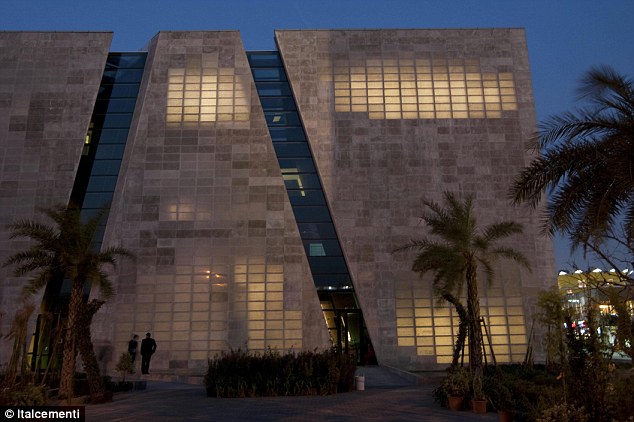
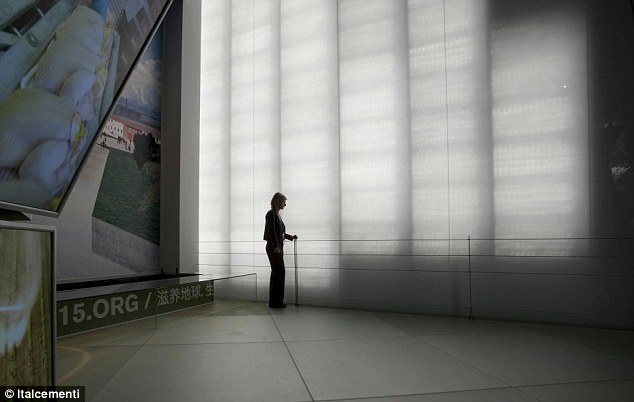
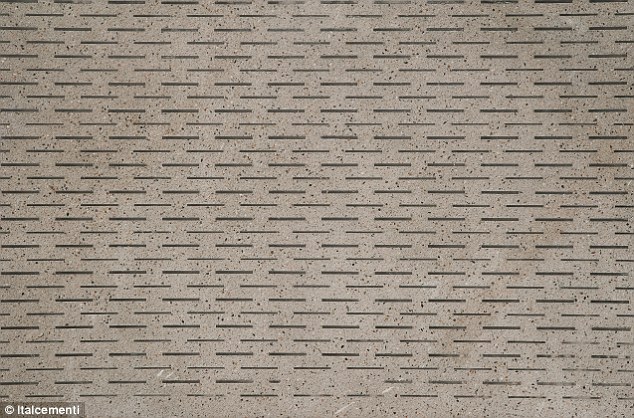
The new product developed at the Bergamo-based laboratories ensures transparency through an innovative cement / admixtures mix design. The excellent flow properties of the mix allow bonding a plastic resin matrix into a final panel that combines the typical robustness of cementitious materials and the possibility of filtering light both inwards and outwards. This is the first solution for an industrial application of “transparent cement”.

 
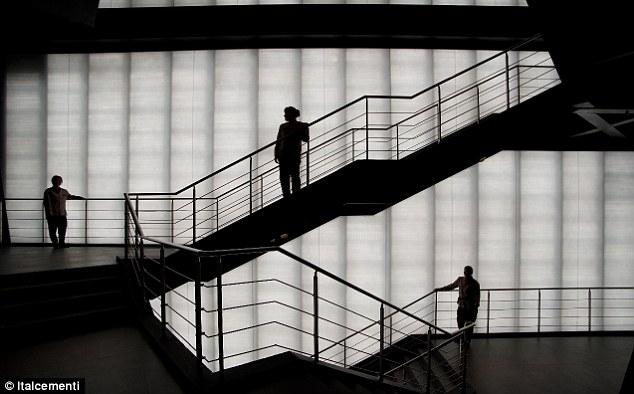
Used for the first time in Shanghai, future applications of this material may encompass its use as an architectural component with diversified, integrable functions, such as, for example, internal lighting (shading/light diffusion techniques).
The challenge of transparency confirms the innovative and creative dimension of Made in Italy and allowed Italcementi Group to provide the Italian Pavilion with know-how and solid business experience, as had happened in the past with other important architectural projects.
 
At the heart of Italcementi Group’s innovation are the laboratories based in Bergamo and Paris where the daily work of about 170 researchers, including chemists, geologists and engineers, has made it possible to file over 60 patents in just more than a decade.
Italcementi Group’s new research centre, known as ITCLab – Innovation and Technology Central Laboratory, is rising on the Kilometro Rosso site in Bergamo. The new construction will boast a surface area of 11,000 m2, of which over 7,000 m2 totally devoted to research laboratories.

Italcementi Group has developed a network of International scientific cooperation consisting of research centres, universities and companies of the building and building material industry. The current network includes 10 external centres, 30 companies and 26 Italian, European and non-European universities.
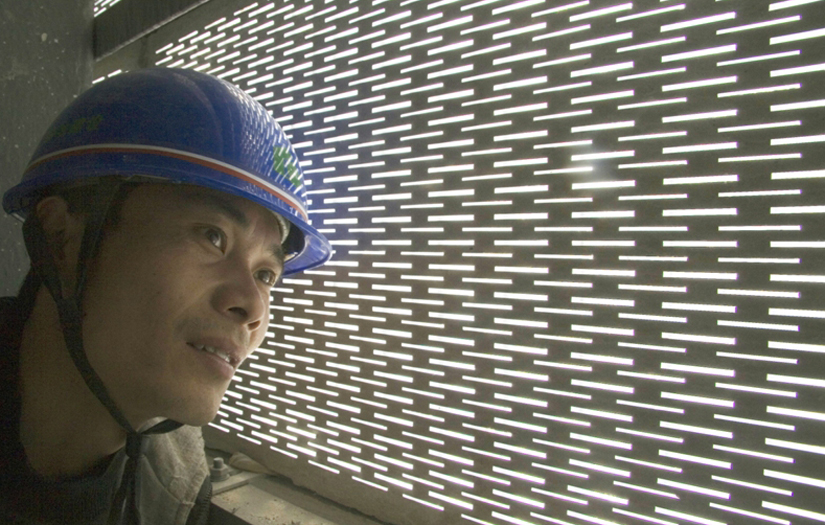
The new i.light® transparent cement, by bonding special resins into a newly conceived mix, allows manufacturing solid and insulated yet light-transmitting construction panels. Italcementi Group researchers have identified the right formulation of a dry ready-mixed product that allows inserting these plastic resins in the cementitious material, which is naturally opaque, without creating cracks and jeopardizing the structure.
The company also makes a “thermal cement” designed to keep buildings cool in the summer and warm in the winter, and a “smog-eating cement” that abates air pollution.
The main advantage of this method of construction is that, we will be able to save a lot of energy which we use for lighting during daytime.
Further Information: http://www.italcementigroup.com

Movie Making With Canon 5D Mark II


With Canon 5D Mark II, the very dream of making a movie(a real featured film) cannot be limited by budget but creativity alone. Recently Ram Gopal Varma, a leading Director in Indian Film Industry shot one full length movie “Dongala Mutha” and introduced the concept of film making with still cameras. Though its new to Indian scenario there were already many TV shows and Movies in the west shot by similar cameras.

The Canon EOS 5D Mark II is a 21.1-megapixel full-frame CMOS digital single-lens reflex camera made by Canon. It succeeds the EOS 5D and was announced on September 17, 2008. The 5D Mark II was the first digital camera used for an official U.S. Presidential portrait, taken by Pete Souza in 2008.
The 5D Mark II was the first DSLR to feature 1080p video recording.  The Canon PowerShot SX 1 IS followed with full HD in a bridge digital camera soon after. The 16:9 aspect ratio portion of the sensor used in video mode is equivalent in sensitive area to a VistaVision 8/35 frame, even larger than the Super 35 frame of the much more expensive Red One camera. This large sensor allows videos to be recorded with very shallow depth of field for a “film look”. The 21 megapixel sensor is downsampled to HD resolution by only using every third line and 4:2:0 chroma subsampling, leading to concern about MoirĂ© patterns in recorded video.
Movie clips can be up to 4 GB in size, approximately 12 minutes of 16:9 HD (1920×1080) or 24 minutes of 4:3 SD (640×480) footage (depending on scene complexity). These limits stem from the 4 GB maximum file size supported by the FAT32 filesystem format used on Compact Flash cards. The camera also imposes a hard maximum clip length of 29 minutes 59 seconds if the 4 GB limit has not already been reached. Video clips are recorded as Quicktime MOV files with H.264/MPEG-4  compressed video and uncompressed PCM audio at 48 kHz. HD bitrate is approximately 38 Megabits per second (4.8MB/sec) and SD bitrate is approximately 17 Megabits per second (2.2MB/sec). Although the internal microphone is mono, stereo audio is supported through the audio input jack. When recording for long periods, especially in warmer climates, increased video noise may occur due to CMOS overheating.
The EOS 5D Mark II is capable of video recording in low-light situations and it is sold for a relatively low price, compared with professional video cameras. For the first eighteen months of its release, the camera only had a 30 frame per second (30p) video mode. On March 15, 2010, Canon released a firmware upgrade to add a 25p mode for PAL format compatibility and a 24p mode for compatibility with motion picture film cameras. The firmware update also modified the 30p mode to record 29.97 fps and the new 24p mode actually records 23.976 fps to have the same frame rate as drop frame timecode. Lastly, the update added manual control of the audio record levels and an official way to disable the Automatic Gain Control.
The Camera costs around 1,40,000 rupees in India. So you have got that much budget, you can start making movies!

What’s Inside USB Flash Drive / Pen drive?


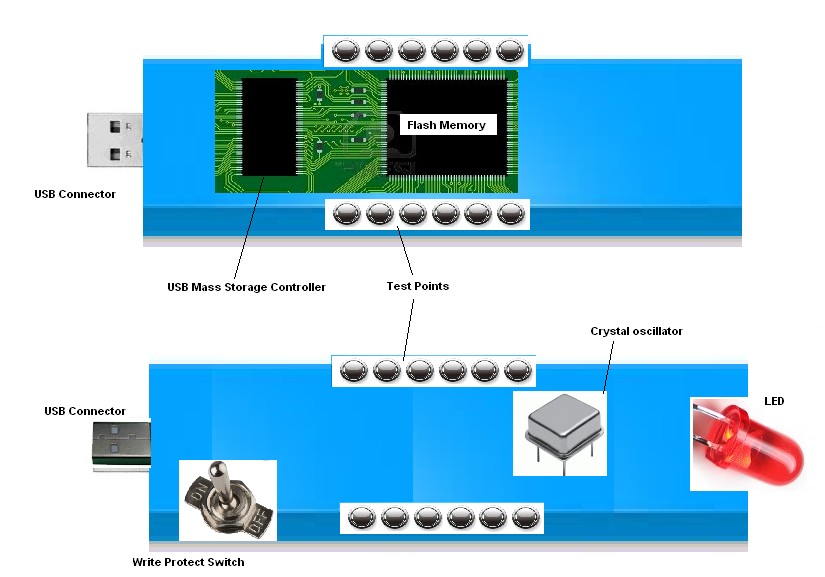
I have been using 2GB USB drive for quite some time and never wondered whats inside it until yesterday. I happened to drop it on the ground from my office in 5th floor. When i reached ground floor, found it to be wide open. It is no longer repairable but I was hoping data could be recovered if flash memory will be transferred to another good flash drive.  The USB Flash device I have opened had 2 chips. One the controller which connect directly to the USB connector, and the others standard flash device. It has very few components and compost mainly of resistors and capacitors. A green LED is provided to indicate controller’s activity. It has also got a write protect on/off switch.
If you happened to own a computer a decade ago, they used to come with an array of connectors. There were serial ports, parallel ports, infra-red ports, audio/speaker connections, and many other ports. These ports were mainly used to connect printers, web cameras, head phones, scanners etc. And the worst part is that they are not plug and play. You need to install drivers to work with them. More over connectors were not compatible with products of different companies.
With the advent of USB,  Now most of the products are having USB as connector and the popular one is USB Flash drive. Computers access modern flash memory systems very much like hard disk drives, where the controller system has full control over where information is actually stored. USB flash drives are often used for the same purposes for which floppy disks or CD-ROMs were used. They are smaller, faster, have thousands of times more capacity, and are more durable and reliable because of their lack of moving parts. Until approximately 2005, most desktop and laptop computers were supplied with floppy disk drives, but floppy disk drives has been abandoned in favor of USB ports.
The first ever Flash memory i owned is 128KB drive which i purchased for US $45(Rs2000) back in 2002.  And today i purchased 64GB pen drive for rupees 7000. Prices have come down a lot with in last few years. My latest pen drive weighs less than 30 grams.  File transfer speeds vary considerably and should be checked before purchase. Speeds may be given in Mbyte per second, Mbit per second or optical drive multipliers such as “180X” (180 times 150 KiB per second). Typical fast drives claim to read at up to 30 megabytes/s (MB/s) and write at about half that speed. This is about 20 times faster than older “USB full speed” devices which are limited to a maximum speed of 12 Mbit/s (1.5 MB/s).
        
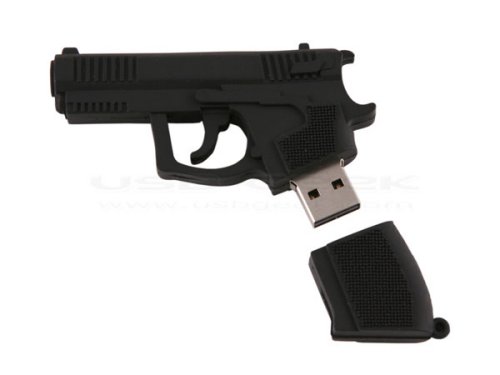
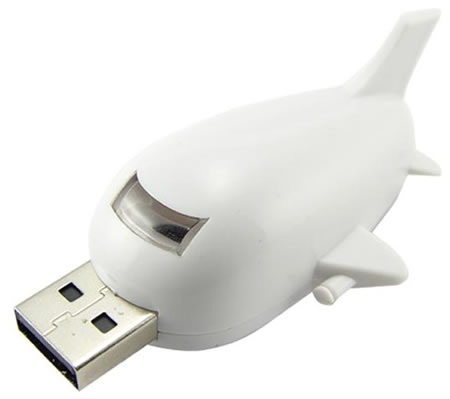
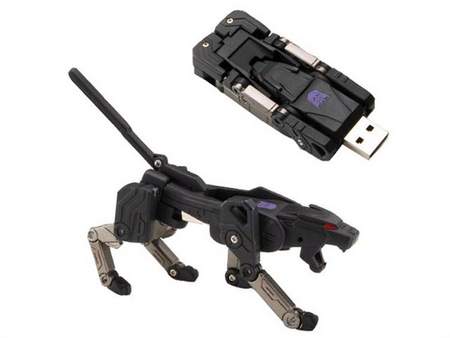
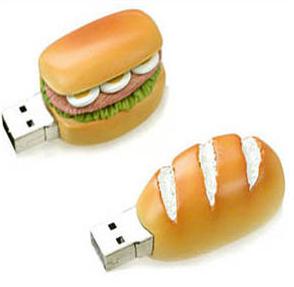
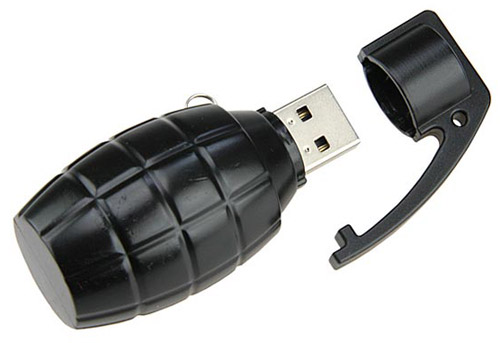
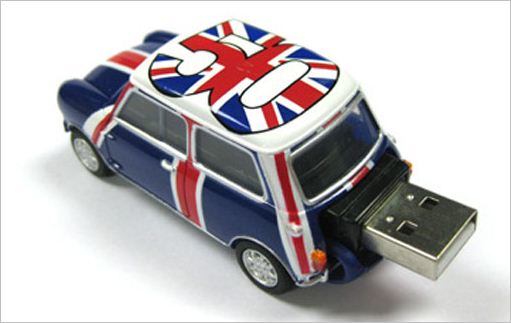
There are lots of attractive looking pen drives in the market. Choose the one that suits your image. A lot can be told about a person by seeing what kind of gadgets he/she uses. But you have to take a few precautions while using and USB drive. There are lots a fake products, they may claim to be 64GB, but when you write it, you wont be able to write more than 32GB or 16GB. So buy a good branded one, rather than a cheap imitation version.
Many pen drives come without write protection switch. I suggest you buy one having it. Write-protection makes a device suitable for repairing virus-contaminated host computers without risk of infecting the USB flash drive itself.
If you are connecting on the back side of computer, USB connectors are hard wired into the mother board. So be careful when you connect them, if you push and pull too hard, you may break the connector. So be gentle when you use a pen drive.